The charango is a stringed instrument created in the region of the Andes situated between Peru, Bolivia and Chile, it has five pairs of strings and an acoustic wooden box, although traditionally it was made with the body of a "Quirquincho" which is a species of armadillo from the Altiplano (as shown in the photograph).
I attached an interpretation of the Chilean charango player called Freddy Torrealba who I think is the greatest exponent of the instrument in my country, mainly due to the use of a superior technique in service of the folk music tradition. The song is called "Camino a Potosi" (Road to Potosi)
Ñamkelen is a word that comes from the mapudungun which is the language of the Mapuche people, it refers to something that is fallen, obsolete or forgotten. In this song there are only two sentences which are "mataste dioses con tu religión, que maldad!" (you killed gods with your religion, such evil!) but with them is more than enough to deliver an extremely powerful message. This is an open demonstration against invading cultures that, with the promise of evangelize and "modernize" the aboriginal peoples, end up killing them both physically and culturally, and all its traditions and identity becomes something Ñamkelen ...
This video is of the full album, the song Ñamkelen is on minute 27:33...
About the topic of meaning and music, and what music can bring to image (weather if it's a film, short, etc.) my wife and I made this very simple and homemade short movie, where you can see how important music can be when combined with image, and how by only changing the music one simple action or scene can have a completely different meaning.
Following my previous publication about Music and Humor, I want to share with you this video of the John Wilson orchestra performing the music from a whole episode of Tom and Jerry, where they also combine the musical performance along with typical "cartoon noises" played by the percusionists in the back. Here they are also appealing to the audience imagination and memories of this famous cartoons.
This is a sound representation of the Mario bros game being played; we have the very well known music of the game, and also the sounds that you would hear if you were playing it, according to the stage that each music represents.
This video game and it's music are in the collective imaginery of almost everyone, since it
was so popular, which gives the audience a role on the performance as well, since we are appealing to their minds who are imagining the scene, so the noises actually make sense because they are associated with a particular image or situation of the game.
Following this idea, at the end of the video I play a curious Japanese instrument called "otomatone" ( http://www.youtube.com/watch?v=qecPQ0FB-64 ) which helps us enter into the midi sonority, typical of the video games of the 90s.
Here is a video of a concert I did with a friend in Chile for Piano and Musical Saw (along with other unconventional instruments), where we did this, with not only a musical purpose but a humorous one.
Hi today I want to comment on the relation between music and image, and how only by changing the music, the meaning of the image can change completely. We can see this in Film music. The best film scores are the ones that not only accompany what is happening, but the ones that add something else to the action, whether if it is something sad, melancholic, tension, etc. Also, with music alone we can be transported to a character's thinking, dreaming, imagining or even what he is feeling. For example, if we take the famous scene from Star Wars, when Darth Vader is arriving from a spaceship, and the doors slowly open so we can see him getting out from his feet to his head; the scene itself it's great because visually we have the character and the tension is built with the camera starting slowly showing him from his feet to his head, but the music adds Darth Vader's presence to the scene. If we would play this scene with a waltz, the result wouldn't be the same.
Here I leave some other examples of this.
First a scene from The Amazing Spiderman; where he is fighting against the Lizard at school. The first half of the scene we can hear action music (and a lot of fighting action as well), but at the end the director makes a joke, and we can see a librarian hearing classical music facing at the camera, whilest in the back we can see Spidermann and the Lizard destroying the room. There we can only hear what the librarian is listening, and the tone of the scene changes inmidiately, only by changing what we can hear.
Here is a scene from the film Amadeus, where Salieri is reading Mozart's works. As he turns the pages, we can hear the music that is written on the paper, which gives the scene much more richness and transport us to the character's mind and feelings much better as if we only saw him look at the music and changing the pages. We are on Salieri's head, just as Mozart's music is.
Hi, today I want to talk about the Lighthouse International school of music, where I'm going as an observer for my thesis project.
The Lighthouse is a music school here in Manhattan, dedicated only to teach music to blind and different visually impaired students. There, they learn to play instruments, have choir lessons and most importantly are taught to read and write Braille music.
They are lead by a great group of musicians and specialist to give the best learning enviroment and also they have the best facilities and technology available for this (Braille typewriting machines, Braille music printers, recording studios, etc).
Also they have one of the biggest Braille music librarys in the USA, and in America, where you can find almost all of the classical music pieces that you need made for visualy challenged students and in Braille music for blind students. They even send this scores to people with this needs from different countries.
This is a great place to learn and to study, and particularly for me, because of my future project both as a musician and as a teacher.
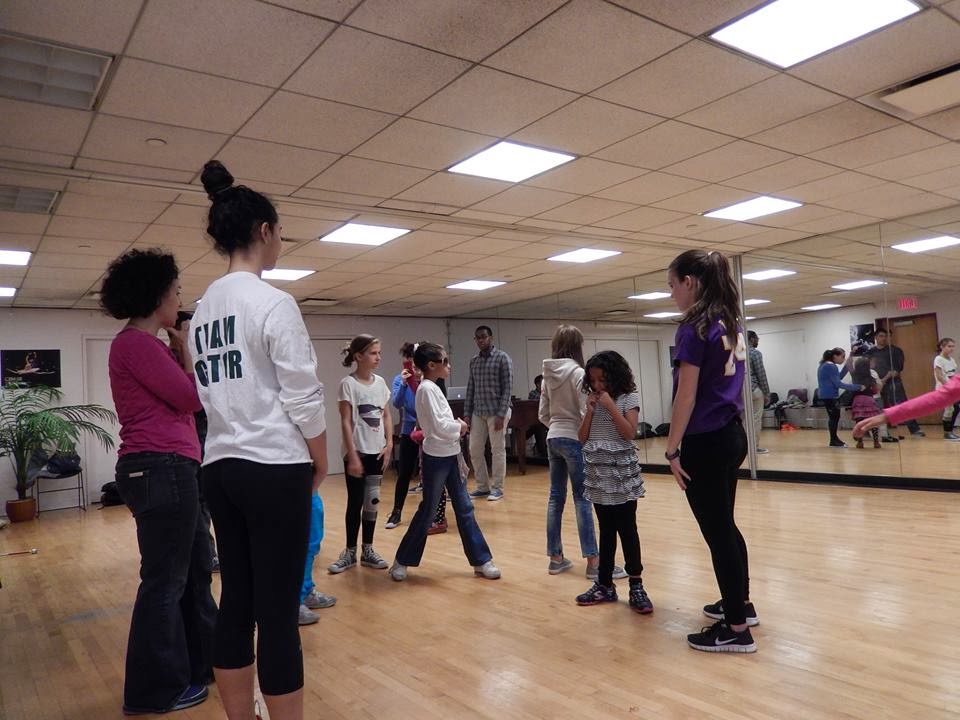
The next pictures are taken from the Dance class at the Lighthouse International: